Restore Mobility. Relieve Pain. Reclaim Life.

Are You Scared About Knee Replacement Surgery?
Discover the real pros and cons of knee replacement surgery in simple terms. Make an informed choice with our easy guide.
Knee surgery Inverness
9/16/20252 min read
CONs of Knee Replacement Surgery
Recovery Time Full recovery can take 3–6 months. Physical therapy and home exercises are essential for best outcomes.
Surgical Risks As with any operation, there’s a small chance of infection, blood clots, or implant issues. Choosing an experienced surgeon minimizes these risks.
Activity Limitations High-impact sports like running or basketball are usually off the table. Patients typically switch to lower-impact activities.
Potential for Ongoing Discomfort Some patients report lingering stiffness or mild pain, especially in cold weather or after long periods of inactivity.
Making the Decision
Assess Your Lifestyle Are your daily activities severely limited by knee pain? If the cons seem manageable compared to ongoing discomfort, surgery could be worth it.
Consult a Specialist A knee surgeon can evaluate your X-rays, discuss implant options, and tailor a plan to your needs.
Plan Your Recovery Arrange for physical therapy, support at home, and necessary mobility aids in advance.
Weigh Long-Term Benefits Consider the big picture: fewer painkillers, reduced doctor visits, and renewed freedom often outweigh short-term recovery challenges.
Knee replacement surgery is more than a medical procedure; it’s a pathway back to the life you love. Armed with this clear pros-and-cons breakdown, you can decide confidently—fears acknowledged, future regained.
Need more guidance? Reach out to our clinic for a personalized consultation and next steps toward a pain-free tomorrow
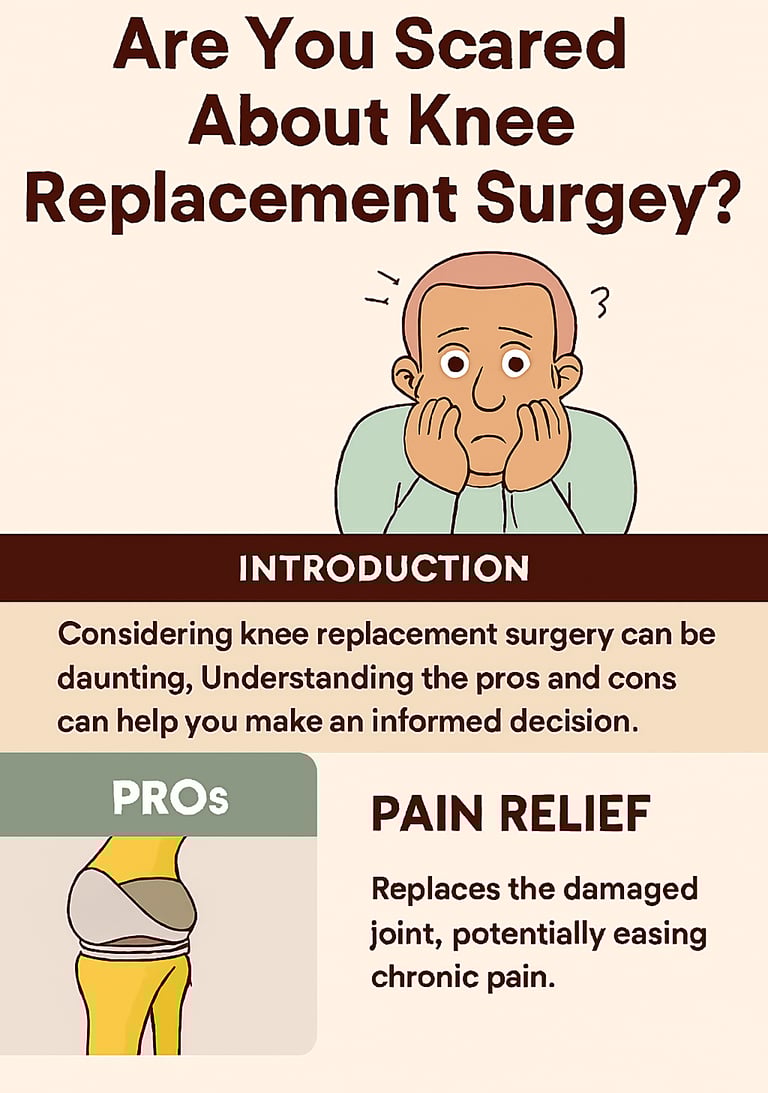
Knee replacement can feel like a big leap. Slipping on your shoes, climbing stairs, or even resting at night might be riddled with unease about the operation. Let’s face your fears head-on by weighing what you’ll gain—and what you should watch out for.
PROs of Knee Replacement Surgery
Pain Relief Replacing damaged cartilage with a smooth artificial joint often brings dramatic pain reduction, freeing you from daily discomfort.
Improved Mobility Say goodbye to stiffness. Most people regain a natural bending range, making everyday tasks and hobbies easier.
Long-Lasting Results Modern implants can last 15–20 years. One surgery keeps you active through retirement, minimizing repeat procedures.
Enhanced Quality of Life With less pain and more motion, simple joys—walking in the park, playing with grandkids—become possible again.
1. How long does a knee replacement last?
Modern knee implants last around 15 to 20 years, depending on activity levels, weight, and overall health. Many patients enjoy decades of pain relief from a single surgery.
2. What is the best age for knee replacement surgery?
There’s no “perfect” age, but most patients are between 55 and 80 years old. Younger patients may need a revision later, while older patients may face higher surgical risks.
3. How painful is knee replacement surgery?
You’ll be under anesthesia during the operation, so you won’t feel pain. After surgery, discomfort is managed with medication and physiotherapy. Most people notice pain improvement within a few weeks.
4. What is the recovery time after knee replacement?
Recovery varies, but most patients use walking aids for the first 2–6 weeks. Full recovery, including strength and flexibility, usually takes 3–6 months with regular physiotherapy.
5. Are there alternatives to knee replacement surgery?
Yes. Before surgery, doctors may recommend physiotherapy, weight loss, medications, injections, or partial knee replacement. Surgery is usually the last option when other treatments don’t work.
6. Is knee replacement surgery safe?
Knee replacement is generally safe, with a success rate of over 90%. However, as with any major surgery, risks like infection, blood clots, or implant issues can occur. Choosing an experienced surgeon reduces these risks.
FAQS About Knee Replacement Surgery
Contact
© 2025. All rights reserved.
01463 490297
inverness.customerservice@circlehealthgroup.co.uk
Address
6 Ardross Terrace, Inverness IV3 5NQ